
Hebei Zhanzhou Auto Supplies Co., Ltd.: Your Leading Boat Covers Supplier
Hebei Zhanzhou Auto Supplies Co., Ltd. was established in 2016. The company keeps up with the times and has won unanimous praise from domestic and foreign customers with diligent and dedicated employees, high-quality products, strong technical strength, and a scientific and rigorous management system, as well as sincere and sincere service.
Why Choose Us
Wide Product Range
We are a company specializing in the production and manufacturing of car covers (such as car covers, motorcycle covers, bicycle covers, boat covers, RV covers, etc.).
Broad Market
The product is sold to more than 60 countries and regions such as the United States, Germany, France, and the United Kingdom, and is highly welcomed by customers.
Real Factory with Affordable Price
The company currently has 88 employees and a factory area of over 6000 square meters. We provide high-quality and affordable products, please feel free to contact us!
High Quality Service
We have an experienced and professional customer support team to provide flexible service to customers around the world, wholeheartedly provide customers with high-quality products and professional, efficient and thoughtful services.
-

Pontoon Waterproof Boat Cover
Model: ZZ027. Made of marine grade polyester fabric and PU coating.. The bottom adopts an elastic hem design, creating a comfortable fit.. Suitable for Pontoon boat cover Add to Inquiry -
Oxford Waterproof Boat Cover
Model: ZZ028. Made of marine polyester fabric and PU coating.The bottom adopts an elastic hem design, creating a comfortable fit.Applicable to shipsFeatures: Waterproof, dustproof, UV resistant, Add to Inquiry -
Jon Outdoor Boat Cover
Model: ZZ029. Elastic cord in bottom hem providesa quick and secure fit.. Reinforced corners.. Weather polyester fabric resistsmildew.. Heavy-duty non-scratch D-rings. Add to Inquiry -
Heavy Duty Outdoor Boat Cover
Model: ZZ030. Made of marine polyester fabric and PU coating.. The bottom adopts an elastic hem design, creating a comfortable fit.. Applicable to ships. Features: Waterproof, dustproof, UV Add to Inquiry


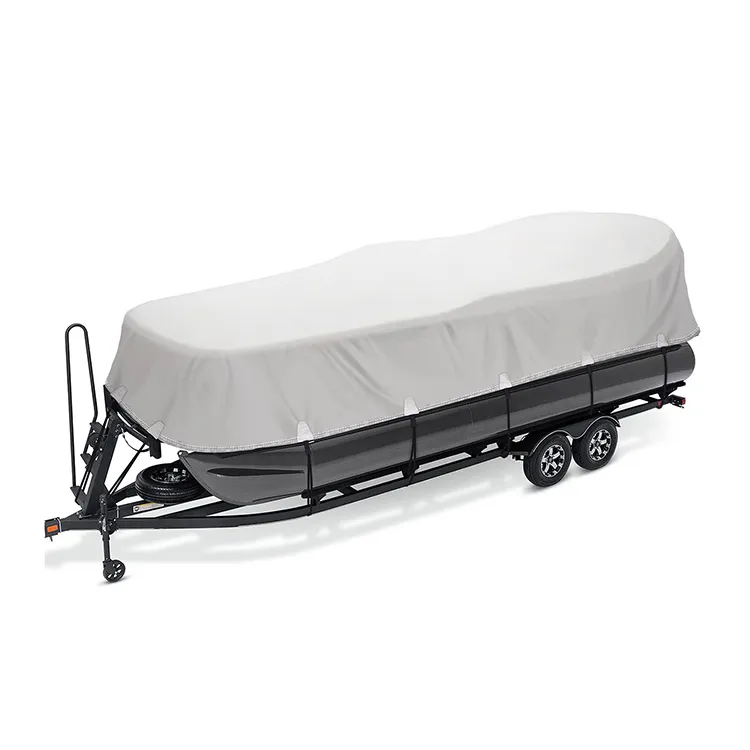
Definition of Boat Covers
Boat Cover is a textile product specifically designed to protect boats from external elements and damage. It is a crucial accessory for boat owners as it helps preserve the boat's aesthetics, prolong its lifespan, and maintain its overall condition. Boat covers are available in various materials, sizes, and designs, catering to different types of boats and specific requirements.
Advantages of Boat Covers
Protection from the Elements
Perhaps the most obvious reason why boat covers are necessary is their ability to protect your boat from damage the elements, such as the sun, UV rays, rain, wind, snow, or whatever else Mother Nature throws your way. Subsequently, these natural phenomena can lead to fading, cracking, or a chalky layer on your boat's surface, especially on the exterior but also interior spaces as well. A boat cover also protects against other natural phenomena such as falling tree sap, bird droppings, or animal wildlife.
Preventing Damage and Wear
Following on the previous point, a good boat cover reduces wear and tear on your boat which is a constant struggle for many boat owners. The occasional scratch, dent or other cosmetic damage will add up and lower the beauty of your boat, but gradual wear and tear can also accelerate its depreciation. Boat covers greatly enhance the lifespan of your boat by minimizing wear and tear.
Keeping the Boat Clean
Again, keeping the elements out means keeping what's underneath clean and tidy. Dust, fallen leaves or animal droppings can be a headache to deal with, but some (like animal droppings) can pose a hygiene hazard if inhaled. What's more is that a boat cover saves you lots of time and effort cleaning your boat (you should do this anyway), as much of the dirt and debris will be kept at bay.
Enhanced Security
If your boat is routinely left at a marina or at a dock in the off seasons, you may not have too much to worry about if there is marina security or property security in place. Nevertheless, a savvy thief can still attempt to break into your boat and steal valuables or simply vandalize the boat. A boat cover acts as a deterrent, especially if it's made of a rugged material that fits snugly to the contours of your boat.
Cost Savings
How can a boat cover save you money if you have to spend it to buy the cover in the first place? The answer can be found in the previous points. A good, rugged boat cover can save you plenty of your hard-earned money by prolonging the lifespan of your boat, reducing the need for additional cleaning and maintenance and secure your valuables if any are left aboard. A boat cover is a must-have accessory for any boat owner, no matter the size of the boat. Protection from the elements and reduced wear and tear should already be good enough reasons to purchase a dependable boat cover, but all of the other benefits make them simply a must-have.
Different Types of Boat Covers
Mooring or Summer Storage Covers
These covers are designed to be used while your boat is not being used during summer. When you leave your boat at the dock, it needs to be protected from summer storms, wildlife, and anglers, so mooring covers have a high pitch. While the angle makes them ill-suited for traveling, it keeps your boat well-protected and sheds water effectively. Summer storage covers are generally made with breathable material and venting systems to allow moisture to leave the boat, too. So, the cover keeps unwanted elements out while preventing mold and mildew from growing inside.
Travel Covers
These covers are made primarily for protecting your boat while on the road. They have a more streamlined design with a lower pitch, so they can easily travel at highway speeds while protecting your boat from wet weather conditions or from gravel and debris flung up while driving. Travel covers still shed water, but the lower pitch can lead to some pooling, especially with pontoon covers. Watch out for excess water when removing the cover to stop it from leaking into your boat.
Like mooring covers, they are made of breathable fabric to allow moisture to leave your vessel and keep the inside dry and clean.
Winter Storage Covers
Winter covers are expertly designed to withstand harsh winter conditions and protect your boat through the cold months. They have a much higher pitch than summer storage or travel covers and use a laminated material that allows ice and snow to slide off the cover more readily. The frame is made from heavy-duty materials to allow it to stand up to winter winds and snow loads. This is unlike summer storage or travel covers that just use lightweight telescoping aluminum poles that cannot withstand heavy snow or ice loads.
Boat Cover Attachment Methods
Along with different types of boat covers, multiple styles of attachments make putting on your boat cover easier or create better protection for your boat. Here are the three methods we recommend.

01.
Tie-Down Boat Covers
These are the old standard for travel covers. Tie-down covers take longer to install but are easier to use if you have hand issues. Never use bungee cords in place of tie-down ropes because they allow the cover to jump around on your boat, leaving rub marks on your boat and causing your cover to develop wear holes. Tie-down covers are used for travel and are unsuitable as mooring covers since you don't have a trailer to tie them onto.
02.
Snap-On Boat Covers
Snap-On covers are generally more convenient than tie-down covers. They are best suited for mooring or summer storage but are also a very popular option for travel. They can sometimes be hard to use if you have problems with hand strength, but several options make installing your snap-on cover easier. We offer EZ grab loops to assist in installing snap-on covers that are used exclusively for mooring or summer storage. J-clips and the Stay-put fasteners are other similar attachment systems.

Materials of Boat Covers
Polyester
Polyester boat covers are known for their strength and durability. Made from synthetic fibers, they offer excellent resistance to UV rays, mold, and mildew. Moreover, polyester covers are relatively lightweight, making them easy to handle and install. Their water-resistant properties ensure that your boat remains dry even during heavy rain. However, it's important to note that polyester may not be as breathable as other materials, which could lead to condensation buildup under the cover. To combat this, some polyester covers are designed with vents to allow air circulation.
Acrylic
Acrylic boat covers are popular for their aesthetic appeal and resistance to fading. These covers are made from a synthetic fabric that offers great color retention, even when exposed to harsh sunlight. Acrylic covers are also breathable, allowing air circulation to prevent mold and mildew. They are known for their durability and ability to withstand extreme weather conditions. However, it's worth mentioning that acrylic covers tend to be more expensive than polyester covers. If you're looking for a cover that combines style and functionality, acrylic might be the right choice for you.
Nylon
Nylon boat covers are known for their exceptional strength and abrasion resistance. This synthetic material is highly durable and can withstand rough handling and harsh conditions. Nylon covers offer excellent water resistance, ensuring that your boat remains dry even in heavy rain or snow. They are also highly breathable, allowing moisture to escape and preventing mold and mildew. Nylon covers are often lightweight and easy to fold for storage, making them a convenient option for boat owners. However, it's important to note that nylon may not provide as much UV protection as polyester or acrylic covers. If your boat is frequently exposed to intense sunlight, you may want to consider other options.
Factors to Consider When Selecting Boat Cover Materials
While the characteristics of the materials are important, there are other factors that should also influence your decision:
Durability and Weather Resistance
When selecting a boat cover material, it's crucial to choose one that can withstand the elements. Consider the climate in which you'll be using your boat and opt for a cover that can handle rain, snow, and strong winds. Additionally, look for materials that offer protection against UV rays to prevent sun damage.
Maintenance and Ease of Use
Another factor to consider is the care and maintenance required for the boat cover. Some materials may be more prone to staining or require special cleaning products. Additionally, consider the ease of use, such as how easy the cover is to install and remove.
Specialty Materials for Specific Needs
Besides the popular choices, there are specialty materials available to address specific needs:
Materials for UV Protection and Waterproofing
If you want to enhance UV protection or water resistance, there are materials designed specifically for these purposes. These materials often incorporate additives or coatings to provide extra layers of protection.
Lightweight Vs. Heavy-Duty Options
Depending on your boat's size and storage requirements, you may prefer lightweight or heavy-duty materials. Lightweight options are easier to handle and store, while heavy-duty materials offer increased durability and protection in extreme conditions.
Innovations in Boat Cover Materials
As technology advances, so do boat cover materials. Here are a couple of innovations worth considering:
Eco-Friendly and Sustainable Choices
For environmentally conscious boat owners, there are materials made from recycled or sustainable sources. These covers not only provide protection for your boat but also contribute to reducing your ecological footprint.
Expert Tips for Choosing the Right Material for Your Boat
If you are still unsure about what the best option for boat cover materials is, you can always contact experts in the matter.
General Guide to Boat Cover Cleaning & Storing
No matter the type of fabric used for your boat cover, there are several rules of thumb you should always follow when cleaning and storing it.
Be Gentle
A dirty boat cover might have you reaching for the pressure washer, but that would be a mistake. Even a heavy-duty boat cover can be ruined by power washing because the water pressure removes the protective finish on the canvas and can damage the threads, shortening the effective lifespan of your cover. Be gentle when it comes to boat canvas cleaners, too. Although some canvases will tolerate mild soap or other cleaning solutions, we've always found pure, plain ol' water to be enough for most jobs. Brush loose dirt and debris off your boat cover before gently washing it with a soft brush and clear flowing water. If there are stains, make sure to follow the care instructions before introducing any cleaning products. Always let your canvas air dry!
Use & Store It Properly
Only use your boat cover for its intended use; do not use any cover that is not made for outdoor winter storage as a winter storage cover unless it is specifically designed to handle the snow loads and winter conditions. Mooring covers should never be used for travel either. They are designed to shed water, not for travel. When storing your boat with the cover on, please don't keep your boat under the trees or in the shade (which promotes mold growth), and make sure your cover is clean and dry before storing it. Folding your cover while it's still wet or damp can also allow mold to grow! Lastly, never roll your canvas up and leave it on the floor, which can attract mice and other pests. We recommend tying a rope around the boat cover and hanging it from the rafters in your garage or purchasing a METAL garbage bin with a tight fitting lid for storage.
Make Repairs ASAP
If you notice any holes, tears, rotted seams, missing snaps, or other flaws in your boat cover, make sure to have them repaired as soon as possible. Maintaining your canvas products and repairing minor issues before they worsen can save you a lot of money in the short and long run.
Caring for Your Boat Tops
To ensure the hardware, framing, and fabric stay in prime condition for the boating season, remember to:
- Clean the frame thoroughly with a gentle cleanser at least once a year.
- Replace any missing or broken parts right away.
- Wash out and dry fasteners, clips, and zippers when you notice them gathering dirt or debris.
- Never power wash your fabric top. Instead, use clear water, a gentle cleanser, and a soft bristle brush once a month to lift dirt and debris off your fabric.
- Apply a fabric guard to preserve your top's water-repellent coating after each cleaning.
Our factory


Ultimate FAQ Guide to Boat Cover
Q: What are the advantages of using boat cover?
A: Discourages Theft
A lot of people love to keep their boats stocked with handy accessories. Boating accessories and adventure gear are pretty easy to snatch right off the deck. With a boat cover, people can't see what accessories you keep stored in your boat. It also becomes much harder for criminals to access your valuables and all small accessories will be kept safe and secure while you journey. A good boat cover also discourages boat theft because people who pass by your property can't see what type of boat you have or what the condition of the boat might be.
Protect Your Seats from UV Rays
It is important to keep your vinyl seats protected from these damaging UV rays or they will become faded or they will soon start to crack. Once your seats start to crack, they become vulnerable to water damage and mold growth because water will be absorbed by the sponge inside the seats. This moisture will stay there and start to rot as time passes on. Your seats could be completely ruined in no time at all.
Protect the Bodywork from UV Rays
The sun rays can be pretty brutal here in Australia. It is important to keep your vinyl seats protected from these damaging UV rays or they will become faded or they will soon start to crack. Once your seats start to crack, they become vulnerable to water damage and mold growth because water will be absorbed by the sponge inside the seats. This moisture will stay there and start to rot as time passes on. Your seats could be completely ruined in no time at all.
Protect Your Bodywork during Travels
As you journey, your boat can be damaged by all sorts of elements like brushes, trees, and especially by nosy people who all want to get a closer look. Boat covers are an absolute necessity if you journey with your boat. It keeps scratches off the bodywork and prevents nosy people from getting too hands-on with your expensive vessel.
Keep Rain Out Of Your Boat
Boats are pretty waterproof but there are always some parts that you want to be extra careful about not getting soaked. Too much water on the deck, helm, or seats can result in water damage as time goes on. Lots of humidity can also cause mold to start growing inside your boat. With a good boat cover, you can keep rainwater out and your boat's interior will be protected.
Keeps Your Boat Nice and Clean
Boats are pretty waterproof but there are always some parts that you want to be extra careful about not getting soaked. Too much water on the deck, helm, or seats can result in water damage as time goes on. Lots of humidity can also cause mold to start growing inside your boat. With a good boat cover, you can keep rainwater out and your boat's interior will be protected.
Keep the Interior Dry And Clean
Boats can collect a lot of dust while they are stored in the garage. Over time, dust and other particles will react with the humidity in the air and a sticky paste will settle all over your boat. The sticky brown deposits can be challenging to remove and will make your boat look very messy. A cover will keep your boat nice and clean while it is being stored.
A lot of people love to keep their boats stocked with handy accessories. Boating accessories and adventure gear are pretty easy to snatch right off the deck. With a boat cover, people can't see what accessories you keep stored in your boat. It also becomes much harder for criminals to access your valuables and all small accessories will be kept safe and secure while you journey. A good boat cover also discourages boat theft because people who pass by your property can't see what type of boat you have or what the condition of the boat might be.
Protect Your Seats from UV Rays
It is important to keep your vinyl seats protected from these damaging UV rays or they will become faded or they will soon start to crack. Once your seats start to crack, they become vulnerable to water damage and mold growth because water will be absorbed by the sponge inside the seats. This moisture will stay there and start to rot as time passes on. Your seats could be completely ruined in no time at all.
Protect the Bodywork from UV Rays
The sun rays can be pretty brutal here in Australia. It is important to keep your vinyl seats protected from these damaging UV rays or they will become faded or they will soon start to crack. Once your seats start to crack, they become vulnerable to water damage and mold growth because water will be absorbed by the sponge inside the seats. This moisture will stay there and start to rot as time passes on. Your seats could be completely ruined in no time at all.
Protect Your Bodywork during Travels
As you journey, your boat can be damaged by all sorts of elements like brushes, trees, and especially by nosy people who all want to get a closer look. Boat covers are an absolute necessity if you journey with your boat. It keeps scratches off the bodywork and prevents nosy people from getting too hands-on with your expensive vessel.
Keep Rain Out Of Your Boat
Boats are pretty waterproof but there are always some parts that you want to be extra careful about not getting soaked. Too much water on the deck, helm, or seats can result in water damage as time goes on. Lots of humidity can also cause mold to start growing inside your boat. With a good boat cover, you can keep rainwater out and your boat's interior will be protected.
Keeps Your Boat Nice and Clean
Boats are pretty waterproof but there are always some parts that you want to be extra careful about not getting soaked. Too much water on the deck, helm, or seats can result in water damage as time goes on. Lots of humidity can also cause mold to start growing inside your boat. With a good boat cover, you can keep rainwater out and your boat's interior will be protected.
Keep the Interior Dry And Clean
Boats can collect a lot of dust while they are stored in the garage. Over time, dust and other particles will react with the humidity in the air and a sticky paste will settle all over your boat. The sticky brown deposits can be challenging to remove and will make your boat look very messy. A cover will keep your boat nice and clean while it is being stored.
Q: What are the differences between universal vs. Custom vs. Semi-custom boat covers?
A: Universal Boat Covers
Universal fit boat covers are the lowest-cost option. Usually, they are made to fit the boat, based only on the boat's length and width. Without well-placed underside supports (usually poles), universal covers will generally deliver a looser fit and less protection than custom or semi-custom options. Universal boat covers are usually held to the boat in one of two ways:
Adjustable straps that are suspended at intervals along the bottom of the cover, secured by fastening them to a fixed object like trailer bunks beneath the boat.
Drawstrings sewn into the hem of the cover, which is positioned over the rub rail and then pulled taut.
Custom Boat Covers
Custom boat covers are the highest-cost option and are tailored to your boat's exact measurements. A custom boat cover offers a tighter fit and thus better protection against the elements, as well as critter intrusion.
Semi-Custom Boat Covers
Positioned between universal and custom covers are semi-custom covers. Their appeal is a balance between affordability and fit for boats with basically the same hull style. Semi-custom cover suppliers may keep "patterns" for popular boat models.
Universal fit boat covers are the lowest-cost option. Usually, they are made to fit the boat, based only on the boat's length and width. Without well-placed underside supports (usually poles), universal covers will generally deliver a looser fit and less protection than custom or semi-custom options. Universal boat covers are usually held to the boat in one of two ways:
Adjustable straps that are suspended at intervals along the bottom of the cover, secured by fastening them to a fixed object like trailer bunks beneath the boat.
Drawstrings sewn into the hem of the cover, which is positioned over the rub rail and then pulled taut.
Custom Boat Covers
Custom boat covers are the highest-cost option and are tailored to your boat's exact measurements. A custom boat cover offers a tighter fit and thus better protection against the elements, as well as critter intrusion.
Semi-Custom Boat Covers
Positioned between universal and custom covers are semi-custom covers. Their appeal is a balance between affordability and fit for boats with basically the same hull style. Semi-custom cover suppliers may keep "patterns" for popular boat models.
Q: What to look for when buying boat covers?
A: OK, hopefully, you now understand and agree with the importance of a properly fitted boat cover. Notice I keep mentioning, a "properly" fitted boat cover. A boat cover has to fit snuggly enough so that there is nowhere that you have extra cover that needs to be folded up to take up the excess. Why, well most importantly, those folded areas are places that can and probably will trap moisture and lead to mold and mildew growth.
On the same note, a boat cover with gaps won't give you the needed protection a properly fitted or custom fitted cover will. The last thing you, me, or any boater wants, is a family of rodents nesting in your boat if it's going to be sitting for any length of time.
If you buy a custom-made boat cover, then you know that it will fit perfectly. If you go with a universal one, you're not going to be guaranteed its going to fit as well as it really needs to, to get all the benefits from it. Granted, a custom fitted boat cover is a bigger investment than a universal size cover. The key word here is, investment! It's my opinion that the derived benefits, far out weigh the added investment cost incurred.
Another important aspect you want your boat cover to provide is protection from ultra-violet rays. So, obviously, the material your boat cover is made from has to provide ultra-violet ray protection. You also want to make sure that the boat cover is water resistant. This may seem obvious, but sure enough, some of the cheaper ones don't repel water but soak it up instead.
On the same note, a boat cover with gaps won't give you the needed protection a properly fitted or custom fitted cover will. The last thing you, me, or any boater wants, is a family of rodents nesting in your boat if it's going to be sitting for any length of time.
If you buy a custom-made boat cover, then you know that it will fit perfectly. If you go with a universal one, you're not going to be guaranteed its going to fit as well as it really needs to, to get all the benefits from it. Granted, a custom fitted boat cover is a bigger investment than a universal size cover. The key word here is, investment! It's my opinion that the derived benefits, far out weigh the added investment cost incurred.
Another important aspect you want your boat cover to provide is protection from ultra-violet rays. So, obviously, the material your boat cover is made from has to provide ultra-violet ray protection. You also want to make sure that the boat cover is water resistant. This may seem obvious, but sure enough, some of the cheaper ones don't repel water but soak it up instead.
Q: How do you take care of a boat cover?
A: To keep your boat cover looking its best, regularly brush off any loose dirt with a soft brush and rinse with lukewarm water. To clean, a solution of lukewarm water and mild natural soap may be used. Rinse thoroughly and allow to air dry.
Q: How can I make my boat cover last longer?
A: Gentle cleaning is key here to protect the canvas. Never powerwash your cover. After cleaning, retreat your cover with 303 fabric protectant and air dry completely before storing. Any moisture that remains on your cover will be trapped, creating a breeding ground for mold, mildew, and thread rot.
Q: How long should a boat cover last?
A: Over time, even the best boat covers become susceptible to natural wear and tear. Because of this, 7-12 years is an average lifespan on any canvas craft cover. So, in order to get the most out of your cover, be sure to follow the recommended fabric maintenance guidelines.
Q: What are the types of boat covers?
A: 1. Tarpaulin Covers: Tarpaulin covers are made of heavy-duty waterproof fabric, usually polyethylene or PVC. They provide excellent protection against rain, snow, and UV radiation. Tarpaulin covers are popular for their durability and affordability.
2. Canvas Covers: Canvas covers are made of woven cotton or polyester fabric, often treated with water-resistant coatings. They offer good breathability, preventing moisture build-up inside the boat. Canvas covers are suitable for both long-term storage and temporary use.
3. Custom-Fit Covers: Custom-fit covers are tailored to fit specific boat models or sizes precisely. These covers provide maximum protection and a snug fit, minimizing the chances of wind lift or damage during transportation. Custom-fit covers can be made from various materials based on the user's preferences.
4. Universal Covers: Universal covers are designed to fit a range of boat sizes and styles. They are typically adjustable and offer convenience for boat owners who have multiple boats or frequently switch between different vessels. Universal covers are available in various materials and designs.
2. Canvas Covers: Canvas covers are made of woven cotton or polyester fabric, often treated with water-resistant coatings. They offer good breathability, preventing moisture build-up inside the boat. Canvas covers are suitable for both long-term storage and temporary use.
3. Custom-Fit Covers: Custom-fit covers are tailored to fit specific boat models or sizes precisely. These covers provide maximum protection and a snug fit, minimizing the chances of wind lift or damage during transportation. Custom-fit covers can be made from various materials based on the user's preferences.
4. Universal Covers: Universal covers are designed to fit a range of boat sizes and styles. They are typically adjustable and offer convenience for boat owners who have multiple boats or frequently switch between different vessels. Universal covers are available in various materials and designs.
Q: What are the tips for dealing with boat covers?
A: 1. Ensure a Clean Surface: Before applying the boat cover, clean the boat's surface thoroughly to remove dirt, debris, and moisture. This prevents the accumulation of mold or mildew and maintains the boat's condition.
2. Proper Ventilation: If using a cover for long-term storage, ensure proper ventilation by using support poles or vents. This allows air circulation and prevents moisture build-up, reducing the risk of mold or mildew growth.
3. Secure the Cover: Fasten the boat cover securely using straps, buckles, or drawstrings to prevent it from shifting or coming loose during transport or adverse weather conditions.
4. Regular Inspection: Periodically inspect the boat cover for any signs of wear, tear, or damage. Replace or repair the cover as needed to ensure optimal protection for the boat.
2. Proper Ventilation: If using a cover for long-term storage, ensure proper ventilation by using support poles or vents. This allows air circulation and prevents moisture build-up, reducing the risk of mold or mildew growth.
3. Secure the Cover: Fasten the boat cover securely using straps, buckles, or drawstrings to prevent it from shifting or coming loose during transport or adverse weather conditions.
4. Regular Inspection: Periodically inspect the boat cover for any signs of wear, tear, or damage. Replace or repair the cover as needed to ensure optimal protection for the boat.
Q: How to measure a boat cover?
A: Take a tape measure to determine the beam width, the widest distance across the boat in a flat line. Repeat the same process to determine the centerline length, the overall length of the boat measured in a flat line between the farthest points forward and aft you want to have covered. Allow for options like bow pulpits, swim platforms, etc., but don't measure over them—keep a flat, straight line. Covers are offered in one-foot length increments.
Q: What are the key factors to consider when shopping boat covers?
A: Fit and Fastening
A precise, secure fit is crucial in preventing damage to your boat during storage. The cover should provide as much protection as possible to vulnerable areas, including helm controls, seating areas, and carpets. Common failure points are seams and areas around fasteners, vents, and supports. Mechanical reinforcement and double stitching in these areas are marks of quality construction. Any area subject to stretching due to the boat's contours can also fail. For custom-fit covers, look for double-layering reinforcement in these sections. Evaluate the mechanisms that secure the cover to the boat, usually snaps, straps, or drawstrings. Will they withstand strong winds from any direction?
Material and Fabric Quality
The choice of high-quality materials for your boat cover enables superior levels of protection. Common materials include acrylic, vinyl, polyvinyl composite, and marine-grade canvas. Acrylic material is the gold standard for boat cover materials. It excels at breathability, UV and fade resistance, and quality. Designed to withstand the harsh marine environment, it is the preferred choice for boat covers.
The distinction between waterproof and water-resistant fabrics is crucial. Waterproof covers have no "breathability", so the boat owner will need to facilitate ventilation for the protected areas to mitigate mold and mildew formation.
Analyze the type of fabric that best suits your boat's storage environment. Acrylic, which is a breathable fabric, is generally appropriate, especially in hot, humid climates.
A waterproof storage cover might be more suitable for winter storage in cold climates with frequent snowfall and rain. Often boats in these conditions are "hauled" from the water as winter begins, treated against mold and mildew, and then professionally shrink-wrapped using waterproof materials. The shrink wrap stays on until the boat is ready to be "splashed" next spring.
Covers for Specific Boat Types
There are boat covers available in all quality and price points for many types of boats. Although custom covers may be unavailable "from stock" for some models, universal-fit covers are available for most boats. You can also find semi-custom covers for many recent models.
Measuring Your Boat for the Best Boat Cover
Follow the manufacturer's instructions when measuring. For semi-custom and custom-fit boat covers, include additional room for optional or add-on (aftermarket) equipment.
Additional Accessories for Boat Covers
To enhance the performance and longevity of your boat cover, additional accessories such as support poles and storage bags are available. Adjustable height poles lift the boat cover to maintain contours so water will roll off rather than puddle. Grommet-like devices are available that fit the tops of the poles. Primarily used to spread the upward force across a wider area, some also include ventilation capability.
Caring for Your Boat Cover
Proper maintenance of your boat cover prolongs its life. Boat covers get dirty because they intercept dust, sand, leaves, and other debris. Just sweeping the cover will help, but washing using mild soap and water at least every 3 months is recommended. Watch for any rips or fraying of the fabric, loose fasteners, or deterioration of stitching or seams. DIY kits with adhesive patches are available to extend the life of the cover.
A precise, secure fit is crucial in preventing damage to your boat during storage. The cover should provide as much protection as possible to vulnerable areas, including helm controls, seating areas, and carpets. Common failure points are seams and areas around fasteners, vents, and supports. Mechanical reinforcement and double stitching in these areas are marks of quality construction. Any area subject to stretching due to the boat's contours can also fail. For custom-fit covers, look for double-layering reinforcement in these sections. Evaluate the mechanisms that secure the cover to the boat, usually snaps, straps, or drawstrings. Will they withstand strong winds from any direction?
Material and Fabric Quality
The choice of high-quality materials for your boat cover enables superior levels of protection. Common materials include acrylic, vinyl, polyvinyl composite, and marine-grade canvas. Acrylic material is the gold standard for boat cover materials. It excels at breathability, UV and fade resistance, and quality. Designed to withstand the harsh marine environment, it is the preferred choice for boat covers.
The distinction between waterproof and water-resistant fabrics is crucial. Waterproof covers have no "breathability", so the boat owner will need to facilitate ventilation for the protected areas to mitigate mold and mildew formation.
Analyze the type of fabric that best suits your boat's storage environment. Acrylic, which is a breathable fabric, is generally appropriate, especially in hot, humid climates.
A waterproof storage cover might be more suitable for winter storage in cold climates with frequent snowfall and rain. Often boats in these conditions are "hauled" from the water as winter begins, treated against mold and mildew, and then professionally shrink-wrapped using waterproof materials. The shrink wrap stays on until the boat is ready to be "splashed" next spring.
Covers for Specific Boat Types
There are boat covers available in all quality and price points for many types of boats. Although custom covers may be unavailable "from stock" for some models, universal-fit covers are available for most boats. You can also find semi-custom covers for many recent models.
Measuring Your Boat for the Best Boat Cover
Follow the manufacturer's instructions when measuring. For semi-custom and custom-fit boat covers, include additional room for optional or add-on (aftermarket) equipment.
Additional Accessories for Boat Covers
To enhance the performance and longevity of your boat cover, additional accessories such as support poles and storage bags are available. Adjustable height poles lift the boat cover to maintain contours so water will roll off rather than puddle. Grommet-like devices are available that fit the tops of the poles. Primarily used to spread the upward force across a wider area, some also include ventilation capability.
Caring for Your Boat Cover
Proper maintenance of your boat cover prolongs its life. Boat covers get dirty because they intercept dust, sand, leaves, and other debris. Just sweeping the cover will help, but washing using mild soap and water at least every 3 months is recommended. Watch for any rips or fraying of the fabric, loose fasteners, or deterioration of stitching or seams. DIY kits with adhesive patches are available to extend the life of the cover.
Q: Which boat cover is best for me?
A: When you are choosing a boat cover from the many options out there today, it is important to take into consideration where you live. If you live in a hot, humid climate, or a cool, moist climate, your cover should be made from a marine grade polyester or acrylic. If you live in a cool, dry climate, most cover materials will work great for you, including polyester mixes.
Q: How do I clean my boat cover?
A: Keep dirt, leaves, and other debris from accumulating on the fabric surface. Washing down with a garden hose on a bright sunny day is recommended once a month.
To remove dirt from either side of the material, use a soft brush and a mild soap solution. Do not use bleach. Rinse thoroughly with clear water and let dry completely before storing or rolling. If accidental tears occur, repair them as soon as possible.
Do not store or roll up while wet. Be sure to clean and dry before storage. Mildew can grow during storage if moisture is present.
Avoid cleaning in a commercial car wash. Do not steam or pressure wash.
To remove dirt from either side of the material, use a soft brush and a mild soap solution. Do not use bleach. Rinse thoroughly with clear water and let dry completely before storing or rolling. If accidental tears occur, repair them as soon as possible.
Do not store or roll up while wet. Be sure to clean and dry before storage. Mildew can grow during storage if moisture is present.
Avoid cleaning in a commercial car wash. Do not steam or pressure wash.
Q: What is the difference between waterproof and water repellant covers?
A: Breathability is the biggest difference when it comes to fabrics which are designated as "waterproof" verses fabrics which are designated as "water repellent". Waterproof fabrics are often coated with rubber or plasticized synthetic resins, making them non-breathable and subject to cracking in extreme heat or cold conditions. Waterproof covers only work to block out moisture from precipitation. In the same way the waterproof material blocked the precipitation out it will hold the moisture in as well. When moisture is present, whether it be from humidity, condensation, or rain evaporation, it will become trapped under a waterproof cover creating mold, mildew, and rust.
Q: What type of boat cover do I need?
A: Boat cover fabrics need to be both breathable and water-repellent. In addition, they should be UV- and mildew-resistant. As you can probably guess, few materials make the cut. We recommend sticking with coated synthetic fabrics.
Q: What color boat cover lasts the longest?
A: Colors and dye: We recommend dark colors, which at first may sound surprising. But the higher amount of dye in dark materials increases a fabric's UV resistance and contributes to its longevity. Blue, black and green last longer than white, tan or red.
Q: Are boat covers good?
A: It does. If your boat will be stored inside, a good cover will help protect it from dust, mice, etc. If it will be stored outside, a quality cover will help protect it from inclement weather.
Q: Do boat covers stretch?
A: Best to do on a warm sunny day, soak your cover for about 20-30 minutes, wring it out (will take some effort), and stretch the damp cover and snap it in place. It should stretch without much effort if it's warm. Let it dry in the sun and it will retain it's shape and be easy to snap the next time.
We're well-known as one of the leading boat covers manufacturers and suppliers in China. Please feel free to wholesale customized boat covers made in China here from our factory. For more cheap products, contact us now.
Waterproof Boat Covers, PP Cotton Car Cover, Waterproof Motorcycle Covers